
Organisation guide
How to Organise Your Fridge
A well-organised fridge keeps food fresher, makes meals easier and means less ends up in the bin. The trick is storing the right food in the right zone — and keeping the whole thing below 5°C.
Know Your Fridge Zones
Upper shelves
Ready-to-eat foods, leftovers, drinks and snacks — a steadier temperature suits foods that won’t be cooked.
Lower / bottom shelf
Raw meat, poultry and fish, sealed and on the coldest shelf, so any drips can’t reach food below.
Crisper drawers
Fruit and vegetables, ideally separated — many fruits give off ethylene that ripens veg faster.
Door
The warmest zone: condiments, juices and other hardy items — not milk or eggs, which prefer steadier cold.
Fridge Organisation Tips
- Keep the fridge below 5°C and check it with a thermometer.
- Store raw meat sealed on the bottom shelf, never above ready-to-eat food.
- Use clear, airtight or vacuum-sealed containers so you can see what you have.
- Group like with like and keep a “use first” zone at the front.
- Cool cooked food promptly before it goes in, and don’t overpack — air needs to circulate.
- Label and date leftovers so nothing gets lost at the back and binned.
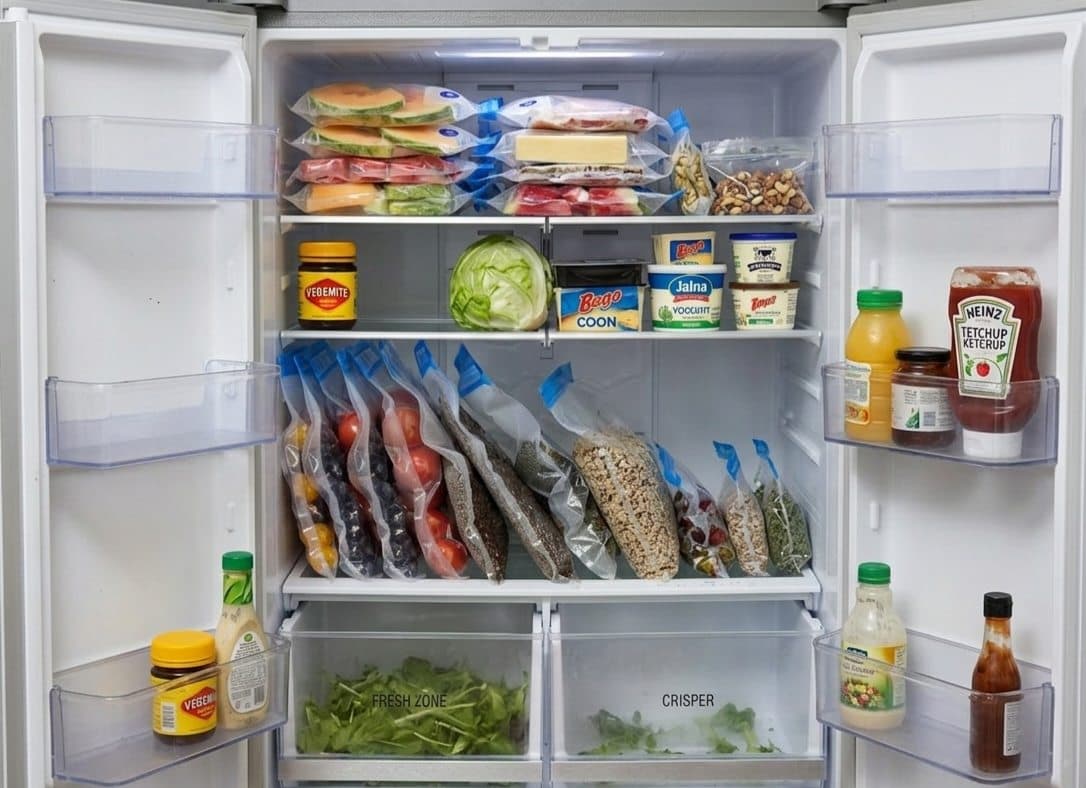
Seal, stack, see
Sealed Food Organises Itself
Vacuum-sealed bags and containers stack flat, stay airtight and let you see what you have — so the fridge stays tidy and food keeps longer. The cordless SealSaver 3-in-1 system seals bags, jars and compatible containers in seconds.
Fridge Organisation FAQs
Work by zone: ready-to-eat foods and leftovers on the upper shelves, raw meat sealed on the coldest bottom shelf, fruit and vegetables in the crisper drawers, and hardy items like condiments in the door. Keep the fridge below 5°C and a “use first” zone at the front.