
Organisation guide
How to Organise Your Freezer
A tidy freezer saves space, money and food. With a little system — flat-freezing, portioning and labelling — you can fit more in, find everything, and keep freezer burn at bay.
Seal portions flat
Sealing portions flat keeps them compact and easy to stack. Here is chicken being sealed in a SealSaver bag.
A Simple Freezer System
Flat-freeze first
Freeze bags flat on a tray, then stand them upright like files. You fit more in and can read every label.
Portion before freezing
Freeze in meal-sized amounts so you only thaw what you need — less waste, faster defrosting.
Label and date everything
A name and date turns a mystery freezer into a usable pantry. Use the oldest first.
Zone it
Give meat, vegetables, meals and bread their own areas so nothing disappears to the bottom.
Freezer Organisation Tips
- Keep the freezer at around −18°C for good long-term quality.
- Remove as much air as possible — air contact is the main cause of freezer burn.
- Cool food before freezing and freeze it while it’s fresh, not on its last day.
- Run a first-in-first-out system: newest at the back, oldest at the front.
- Don’t overfill — leave room for cold air to move, and avoid refreezing thawed raw food.
- Keep a quick list on the door so you actually use what’s in there.
Beat freezer burn
Less Air, Less Freezer Burn
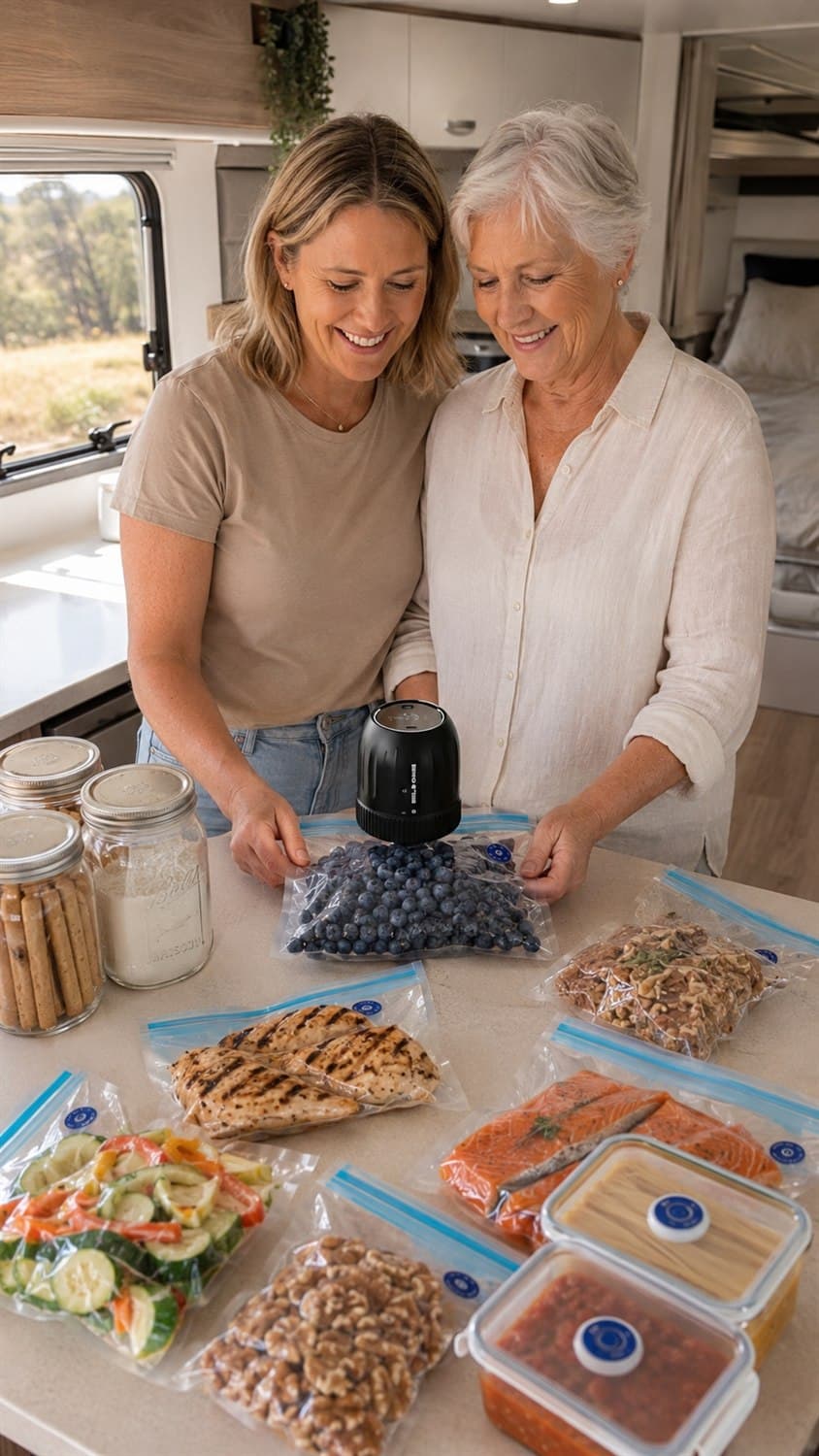
Air is what causes freezer burn. Vacuum-sealing portions before they go in removes most of it, helps protect texture and flavour, and the flat packs stack neatly to save space. The cordless SealSaver seals BPA-free valve bags, jars and compatible containers in seconds.
Freezer Organisation FAQs
Freeze in flat, labelled, meal-sized portions and stand them upright like files so you can read every label. Give meat, vegetables, meals and bread their own zones, and run a first-in-first-out system so older food gets used first.